EN
EN  MY
MY 














Daw Thazin Aung
Non-Executive Director
Daw Thazin Aung is a Non-Executive Director of AYA SOMPO Insurance, a joint venture company between AYA Myanmar Insurance and Sompo Japan Insurance Inc., and a member of AYA Financial Group.
Daw Thazin Aung presently holds the position of Chief Executive Officer of AYA Bank PCL. In her capacity with AYA Bank PCL, she takes charge of business development management and making strategic decisions to ensure the Institution’s sustainable and profitable growth.
In addition to her role as Chief Executive Officer, she also holds several positions within AYA Financial Group. With AFG, she takes charge of AYA Trust Securities Co., Ltd. as the Managing Director for Capital Market Activities including securities brokerage and Corporate Finance Transactions. From her capacity with Corporate Finance activities, she oversees and monitors diversified investment portfolios that include existing, on-going, and new business ventures of Chairman’s investment office as well as new Mergers and Acquisitions, Joint Ventures with Potential Partners for AYA Financial Group’s entities and/or investment in new ventures. She holds a master’s degree in business administration (Corporate Finance) from Nottingham Trent University. Before joining AYA Financial Group, she was a PwC Advisory Partner and local Lead Director/Partner for PwC Myanmar. She has over 16 years of professional experiences including 11.5 years with PwC Singapore and PwC Myanmar for audit, financial advisory and consulting and 5 years in the Maritime service industry in Myanmar.
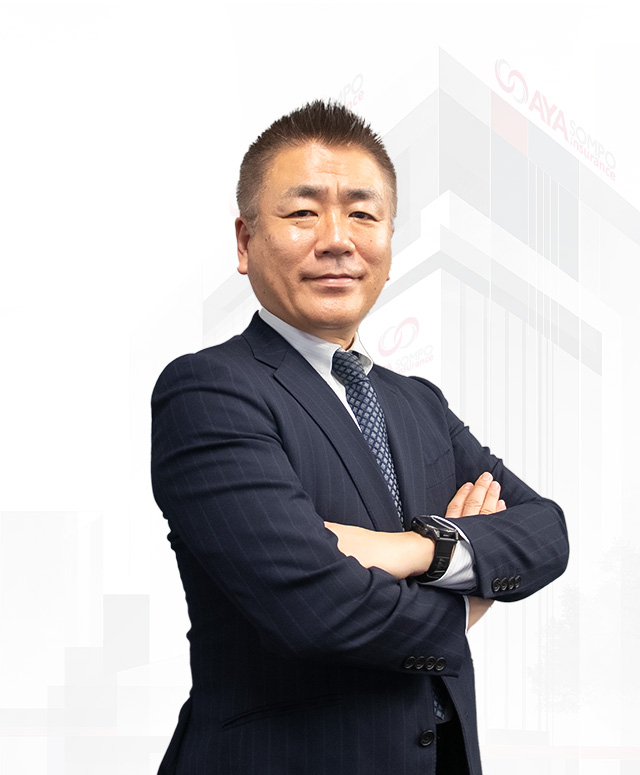
Mr. Taichi Yamamoto
Director
Mr. Taichi Yamamoto is a Board of Director at AYA SOMPO Insurance. Mr. Taichi Yamamoto has held various senior management positions both in Japan and overseas, including as a Director, Senior Vice-President for Business Operations and Chief Risk Officer at PGA Sompo Insurance Corporation (Manila), and a Managerial position at Sompo Japan Insurance (Singapore) Pte Ltd. He has a vast experience in insurance business and has been with the Sompo Group since 1997.
Mr. Taichi Yamamoto is currently managing SOMPO P&C Office at Sompo Holdings, Inc. (Tokyo) since June 2025. He holds a Bachelor of Economics from Tokyo University, Japan, and Master of Business Administration (MBA) from Hitotsubashi University, Japan.

U Myo Min Thu
Chief Executive Officer
U Myo Min Thu is the Chief Executive Officer of AYA SOMPO Insurance, a leading general insurer in Myanmar, and a joint-venture between AYA Myanmar Insurance and Sompo Japan Insurance Inc. Since 2019, he has led the company’s strategic growth and transformation, strengthening its market leadership through digital innovation, operational excellence, and customer-focused solutions. With over 15 years of leadership experience across the insurance, banking, and aviation sectors, he brings a strong track record of building and scaling businesses in emerging markets.
Under his leadership, AYA SOMPO Insurance has strengthened its position as a market leader, with a focus on digital innovation, operational excellence, and customer-centric insurance solutions that expand access to insurance services across the country.
Prior to his current role, U Myo Min Thu had held management positions in Singapore and overseas, where he developed deep expertise in managing teams from different cultural backgrounds, focusing on commercial strategy, operations, and organizational transformation. He brings to the country his wealth of knowledge, international exposure, and experience. He holds a bachelor’s degree in Banking and Finance from the London School of Economics and an MBA from Edinburgh Business School (Heriot-Watt University). Passionate about advancing inclusive financial services, he is committed to shaping the future of Myanmar’s insurance industry by building resilient, digitally enabled organizations.
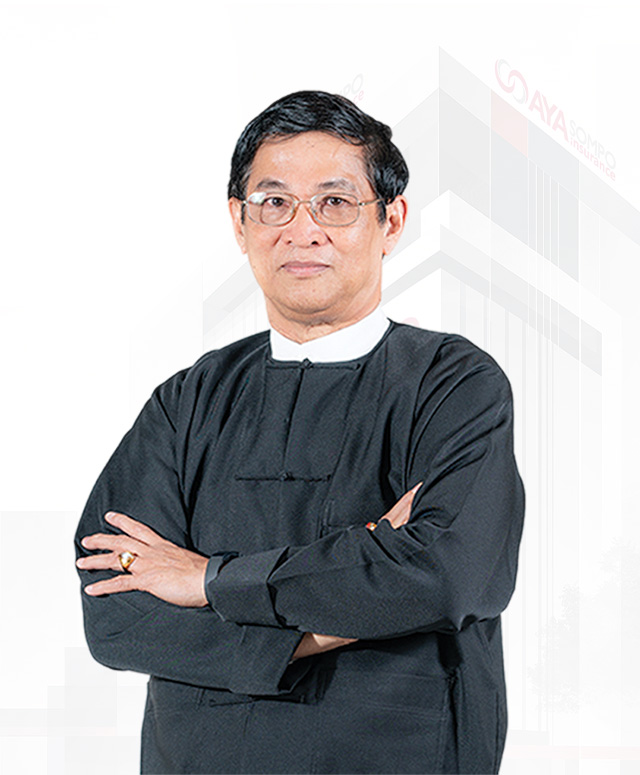
U Than Zaw
Vice Chairman
U Than Zaw is the Vice Chairman of AYA SOMPO Insurance, a joint venture company between AYA Myanmar Insurance and Sompo Japan Insurance Inc., and a member of AYA Financial Group.
U Than Zaw played a pivotal role in establishing AYA Myanmar Insurance (AMI) as the Managing Director when the market liberalized for private insurers in 2013. He was appointed as the Managing Director to AYA Bank from 2011 to 2013 and presently holds the position of Vice Chairman at AYA Bank PCL. During his tenure, he has led the emerging bank in expanding its brand presence and branch network across Myanmar.
U Than Zaw’s extensive experience includes eight years as Treasurer of the Myanmar Olympic Committee and two years as Chief Executive Officer of the Myanmar Football Federation. He has been instrumental in strengthening systems and procedures through proactive initiatives and continues to provide Board-level guidance on policies and practices to ensure the company remains fully compliant with stipulated laws and regulations.
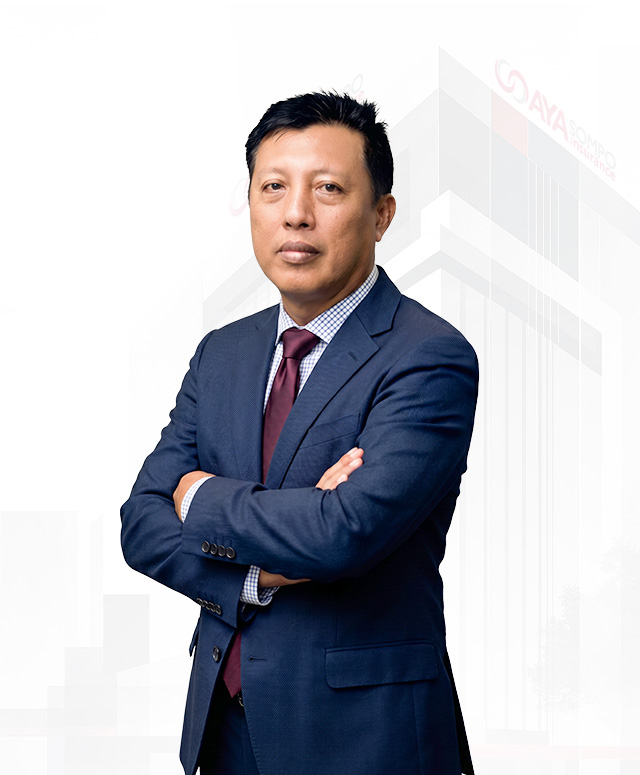
U Zaw Zaw
Chairman
U Zaw Zaw is the Chairman of AYA SOMPO Insurance, a joint venture company between AYA Myanmar Insurance and Sompo Japan Insurance Inc., and a member of AYA Financial Group.
U Zaw Zaw is an established and well-connected entrepreneur and business leader in Myanmar, with over 30 years of management experience. With a combination of overseas experiences and personal strengths, U Zaw Zaw founded Max Myanmar Company in 1993 and AYA Bank in 2010. His achievements include steering the management and growth of AYA Financial Group and Max Myanmar Group of Companies, major conglomerates in Myanmar. He is also the Founder and Chairman of AYA Bank PCL, one of the country’s largest and leading banks in Myanmar.
He is currently serving as the President of the Myanmar Football Federation since 2005 and Senior Vice President of the Asian Football Confederation (AFC). He relentlessly provides both funding and effort for the development of football in Myanmar. As a firm believer of contributing to the society and helping the needy, he has supported various philanthropic causes through the Ayeyarwady Foundation, including the Yankin Children Hospital, Ayeyarwady Covid-19 Center, and a wide range of corporate social responsibility initiatives nationwide.